
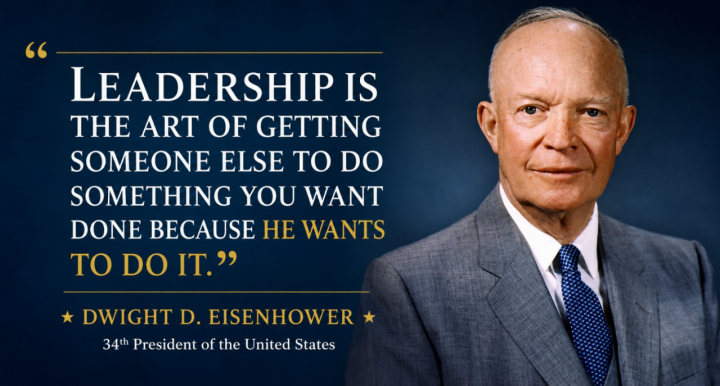
Leadership is often defined by titles, authority, or decision-making styles. Yet history’s most respected leaders demonstrate that true leadership begins much deeper. It begins with character. In this article, I introduce the concept of Character-Based Leadership—the belief that respect, integrity, compassion, fairness, and humility are not management techniques but the natural expression of deeply ingrained values. The leaders who leave the greatest legacy are not those who merely direct people; they inspire them because of who they are.
When discussing leadership, we often focus on strategies, communication skills, decision-making, and management styles. We attend seminars, read books, and study successful executives hoping to discover the secret to becoming better leaders. Yet the most important quality of exceptional leadership cannot be learned from a textbook or mastered through technique.
It begins with character.
“Are you as respectful to others as you are to yourself?”
At first glance, the question appears to ask whether leaders treat employees with the same respect they expect to receive. But the deeper question is whether leaders genuinely possess the kind of self-respect that naturally extends to everyone around them.
People who truly respect themselves rarely have to remind themselves to treat others with dignity. Respect, compassion, fairness, integrity, humility, and kindness become natural expressions of who they are. They are not conscious behaviors—they are reflections of deeply rooted character.
Many of us learned these values long before we entered the workplace. We learned them from parents, grandparents, teachers, military service, faith, mentors, and life experiences that taught us to value other people. Those principles became part of our identity. We do not consciously decide each day to be respectful. We simply are.
The same is true of exceptional leaders. They don’t wake up each morning deciding to be respectful, compassionate, fair, or humble. Those qualities are not management techniques or conscious strategies. They are simply the natural expression of deeply ingrained character and values.
Traditional leadership theory often classifies leaders as “autocratic”, “democratic”, or “laissez-faire” based on how they make decisions and interact with those they lead. While each style has its place, I believe there is another dimension of leadership that deserves equal consideration. I call it “Character-Based Leadership”. Unlike the traditional leadership styles, Character-Based Leadership is not defined by decision-making authority or management techniques. Instead, it is defined by the leader’s character—the values, integrity, compassion, humility, fairness, and self-respect that shape every decision and every interaction.
Character-Based Leadership does not replace the traditional leadership styles. Rather, it complements and transcends them. The traditional models explain “how” leaders make decisions. Character-Based Leadership explains “why” exceptional leaders consistently earn trust, inspire loyalty, develop future leaders, and leave lasting legacies. It is the foundation upon which every effective leadership style is built.
History offers compelling examples of leaders whose actions reflected this philosophy. Abraham Lincoln consistently treated soldiers, political opponents, and ordinary citizens with dignity despite extraordinary pressures. Nelson Mandela emerged from 27 years of imprisonment choosing reconciliation over revenge, demonstrating remarkable humility and respect even toward those who had oppressed him. Neither appeared to view respect as a leadership technique. It was simply who they were. The same can be said of Mahatma Gandhi, Dwight D. Eisenhower, and Herb Kelleher, each of whom earned enduring respect through humility, fairness, and genuine concern for the people they led.
The atmosphere within an organization is therefore not something great leaders deliberately create. It is something they naturally produce. Employees experience the leader’s character every day—in conversations, decisions, recognition, accountability, encouragement, and compassion.
It is within this environment that extraordinary growth occurs. People who are consistently treated with respect begin to respect themselves more. They become willing to contribute ideas, ask questions, accept challenges, and pursue opportunities they might otherwise have avoided. They are not preoccupied with protecting themselves from criticism or humiliation. Instead, they devote their energy to learning, improving, and achieving.
As their confidence grows, so do their capabilities. They become stronger communicators, more effective problem-solvers, and more confident decision-makers. Many discover leadership qualities they never realized they possessed. They begin mentoring others, assuming greater responsibility, and advancing professionally because someone believed in their potential before they fully believed in it themselves.
This is the lasting impact of authentic leadership. Great leaders do not simply produce results—they produce people capable of producing results long after the leader is gone. Their greatest accomplishment is not measured by quarterly performance, organizational growth, or personal recognition, but by the number of individuals whose lives and careers were elevated because they were treated with dignity, compassion, fairness, and unwavering respect.
The greatest leaders don’t act respectfully because leadership books tell them they should. They don’t treat people with dignity because a company policy requires it. They do so because they can’t act any other way. Their character defines their leadership long before their title ever does.
Perhaps that is the true test of leadership. Not how much authority a leader possesses. Not how many people report to them. Not how impressive their title may be.
The true measure of leadership is whether the people who are influenced by it become more confident, more capable, more ethical, and better prepared to lead others themselves.
“Because the greatest legacy any leader can leave is not an organization. It is the people whose lives they transformed.”
If this article has inspired you to think differently about your career, leadership journey, or professional future, I would welcome the opportunity to discuss your goals and explore how my 17 years of professional résumé writing and career coaching experience can help position you for your next career opportunity. Feel free to contact me at arnie.sherr@theresumestore.com or (727) 219-0177.
To learn more about my professional résumé writing, career coaching, and career advancement services, please visit www.TheResumeStore.com.